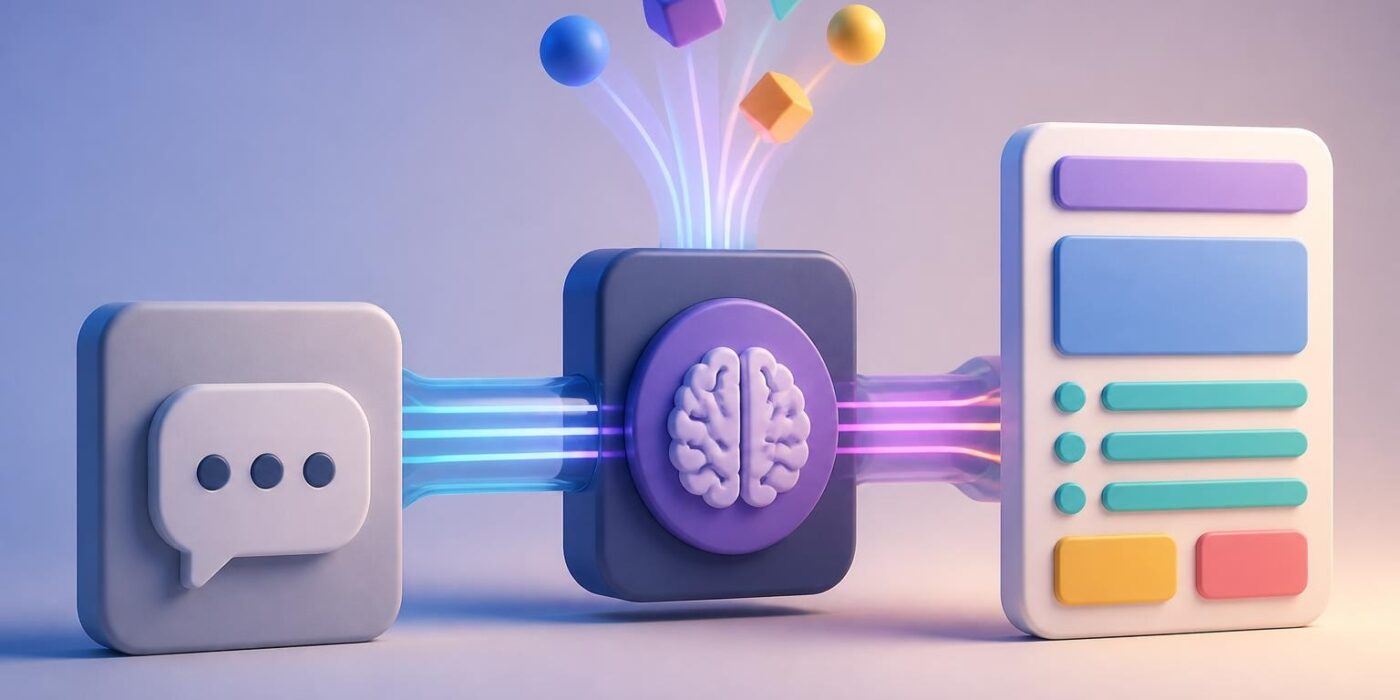
Prompt engineering chatgpt is the skill of crafting precise instructions that get ChatGPT to deliver exactly what you need. Instead of vague questions that produce generic answers, proper prompts transform ChatGPT into a specialized tool for your specific business tasks. This guide shows you exactly how to write prompts that work, with copy-paste templates you can use today.
What Makes a Good ChatGPT Prompt
Good prompts share common characteristics that drive better results. They're specific, contextual, and structured to guide ChatGPT toward your desired outcome.
Effective prompts include:
- Clear role assignment (e.g., "You are an expert email marketer")
- Specific context about your situation
- Desired format for the output
- Constraints or requirements
- Examples when needed
A vague prompt like "Write a blog post" leaves too much to interpretation. A well-engineered prompt specifies the topic, audience, tone, length, and structure. The difference in output quality is dramatic.
The Four-Part Framework
Every strong prompt engineering chatgpt approach follows a framework. Think of it as building blocks that stack together.
- Role: Define who ChatGPT should be
- Task: Explain exactly what you need
- Context: Provide relevant background information
- Format: Specify how you want the output structured
Here's this framework in action:
You are a customer service manager with 10 years of experience in SaaS companies.

Write a response to a customer who received a damaged product. The customer has been with us for 3 years and this is their first complaint. They're frustrated but not angry.

Include:
- An apology
- Immediate solution (replacement + discount)
- Timeline for resolution
- Personal touch acknowledging their loyalty

Format: Professional email, 150 words maximum, warm but professional tone.

This structured approach works across different use cases. You can apply it whether you're drafting emails, analyzing data, or creating marketing content.
Copy-Paste Prompts for Common Business Tasks
These ready-to-use prompts solve specific problems. Just replace the bracketed sections with your information.
Email Writing Prompt
You are a [your job title] at a [company type] company.

Write a professional email to [recipient] about [topic/purpose].

Key points to include:
- [Point 1]
- [Point 2]
- [Point 3]

Tone: [professional/friendly/direct]
Length: [word count]
Call to action: [what you want them to do]

Do not use corporate jargon. Write clearly and concisely.
Real example output:
When used for a follow-up email after a sales call:
Subject: Quick Follow-Up on Our Conversation
Hi Sarah,
Thanks for taking the time to discuss your team's project management challenges yesterday. Based on what you shared about coordinating remote teams across three time zones, I think our asynchronous update feature would solve your biggest pain point.
I've attached a 2-minute demo video showing exactly how it works with distributed teams. Would Thursday at 2 PM work for a brief call to walk through a customized setup for your team?
Looking forward to helping you streamline those weekly status meetings.
Best,
Michael
Meeting Summary Prompt
You are an executive assistant creating meeting notes.

Summarize the following meeting transcript:
[paste transcript]

Format the summary as:
1. Key Decisions Made
2. Action Items (with owners and deadlines)
3. Open Questions
4. Next Steps

Keep bullet points concise. Use participant names when assigning action items.
This prompt engineering chatgpt technique turns rambling meeting recordings into actionable documents. The structured format ensures nothing gets lost.
Content Analysis Prompt
You are a content strategist analyzing marketing copy.

Review this [content type]:
[paste content]

Provide:
1. Clarity score (1-10) with specific issues
2. Three strongest points
3. Three weaknesses with improvement suggestions
4. Recommended changes to improve conversion

Focus on practical, implementable feedback.
| Prompt Type | Best For | Time Saved |
|---|---|---|
| Email Writing | Sales follow-ups, customer service, internal communication | 15-20 min per email |
| Meeting Summary | Converting calls/recordings to action items | 30-45 min per meeting |
| Content Analysis | Improving marketing copy, blog posts, landing pages | 20-30 min per review |
| Data Interpretation | Understanding reports, metrics, spreadsheet analysis | 25-35 min per dataset |
Advanced Techniques for Better Outputs
Basic prompts work, but advanced prompt engineering chatgpt methods unlock significantly better results.
Chain-of-Thought Prompting
This technique asks ChatGPT to show its reasoning process. Add phrases like "Think through this step-by-step" or "Explain your reasoning before answering."
You are a financial analyst.

A company has these metrics:
- Revenue: $2M (up 40% YoY)
- Expenses: $2.3M (up 15% YoY)
- Customer acquisition cost: $450 (up from $320)
- Lifetime value: $1,200 (down from $1,400)

Think through each metric step-by-step, then determine: Is this company healthy? What's the biggest concern?

Show your analysis process before stating your conclusion.
The "show your work" instruction produces more nuanced, reliable answers. ChatGPT considers multiple angles instead of jumping to conclusions.

Few-Shot Learning
Provide examples of what you want. ChatGPT learns your pattern and replicates it.
Convert these customer complaints into positive feature requests:

Example 1:
Complaint: "Your app is too slow to load"
Feature Request: "Implement faster loading times and add a progress indicator"

Example 2:
Complaint: "I can't find anything in the settings menu"
Feature Request: "Redesign settings with clear categories and search functionality"

Now convert these:
1. "The export function never works"
2. "Too many steps to complete a simple task"
3. "Your notifications are annoying"
This approach works exceptionally well for formatting tasks, tone matching, or any situation where showing is clearer than telling. Advanced prompt engineering strategies can significantly improve output quality across different domains.
Constraint-Based Prompts
Add specific limitations to force better thinking. Constraints often improve creativity and precision.
- "Without using industry jargon…"
- "Explain this to someone with no technical background…"
- "In exactly 3 bullet points…"
- "Using only data from 2026…"
Here's a practical example:
You are a marketing manager explaining A/B testing results.

Explain these results to our CEO who has no marketing background:
- Version A: 2.3% conversion rate
- Version B: 3.1% conversion rate
- Statistical significance: 95%
- Sample size: 10,000 visitors each

Requirements:
- No marketing jargon
- Use an everyday analogy
- 100 words maximum
- State the business recommendation clearly
If you're serious about mastering these techniques and want access to hundreds of ready-to-use prompts with structured learning paths, Mammoth Club offers comprehensive AI training with 3,000+ courses covering prompt engineering, ChatGPT applications, and practical AI implementation strategies.

Troubleshooting Common Prompt Problems
Even experienced users run into issues. Here's how to fix the most common problems.
Problem: Generic or Vague Responses
Solution: Add specific constraints and context.
Instead of: "Write about customer retention"
Try:
You are a SaaS customer success manager.

Write a 200-word strategy memo on reducing churn for mid-market B2B customers (50-200 employees) in the software industry who cancel within the first 90 days.

Focus on:
- Onboarding improvements
- Early warning signals
- Intervention tactics

Use data-driven language. Reference industry benchmarks where relevant.
The added specificity eliminates ambiguity. ChatGPT knows exactly what angle to take.
Problem: Wrong Tone or Style
Solution: Provide examples or detailed tone descriptions.
You are writing a LinkedIn post.

Topic: Lessons learned from project failure

Tone: Vulnerable but professional, reflective but not self-pitying, educational without being preachy. Similar to how Brené Brown writes about failure - honest and relatable.

Length: 150 words
Include: One specific example, one lesson, one action other professionals can take
Referencing known writing styles ("like Brené Brown" or "like a Wall Street Journal article") gives ChatGPT clear targets. You can also explore effective prompt patterns for additional techniques.
Problem: Inconsistent Outputs
Solution: Use system-level instructions and temperature controls.
When you need consistency across multiple prompts, establish ground rules:
SYSTEM RULES (follow for all responses):
- Use American English spelling
- Write at 8th-grade reading level
- Avoid passive voice
- Use "we" not "I"
- Include specific numbers when possible

Now complete this task:
[your specific request]
These rules act as a style guide. ChatGPT maintains consistency even across different tasks.
Real-World Workflow Examples
Prompt engineering chatgpt becomes powerful when you chain prompts together into workflows.
Workflow 1: Content Creation Pipeline
Step 1 – Research Prompt:
You are a content researcher.

Topic: [your topic]

Identify:
1. Five main subtopics to cover
2. Three common questions from the target audience
3. Current trends or recent developments (2026)
4. Three potential controversy points or debates

Output in bullet points.
Step 2 – Outline Prompt:
You are a content strategist.

Using this research:
[paste Step 1 output]

Create a detailed outline for a 1,500-word article targeting [audience].

Format:
- Introduction (hook, problem, promise)
- 3-4 main sections with subheadings
- Conclusion with call-to-action

Include notes on what each section should accomplish.
Step 3 – Draft Prompt:
You are a professional writer.

Write the [specific section] using this outline:
[paste relevant section from Step 2]

Requirements:
- Conversational but professional tone
- Include specific examples
- 300-400 words
- End with transition to next section
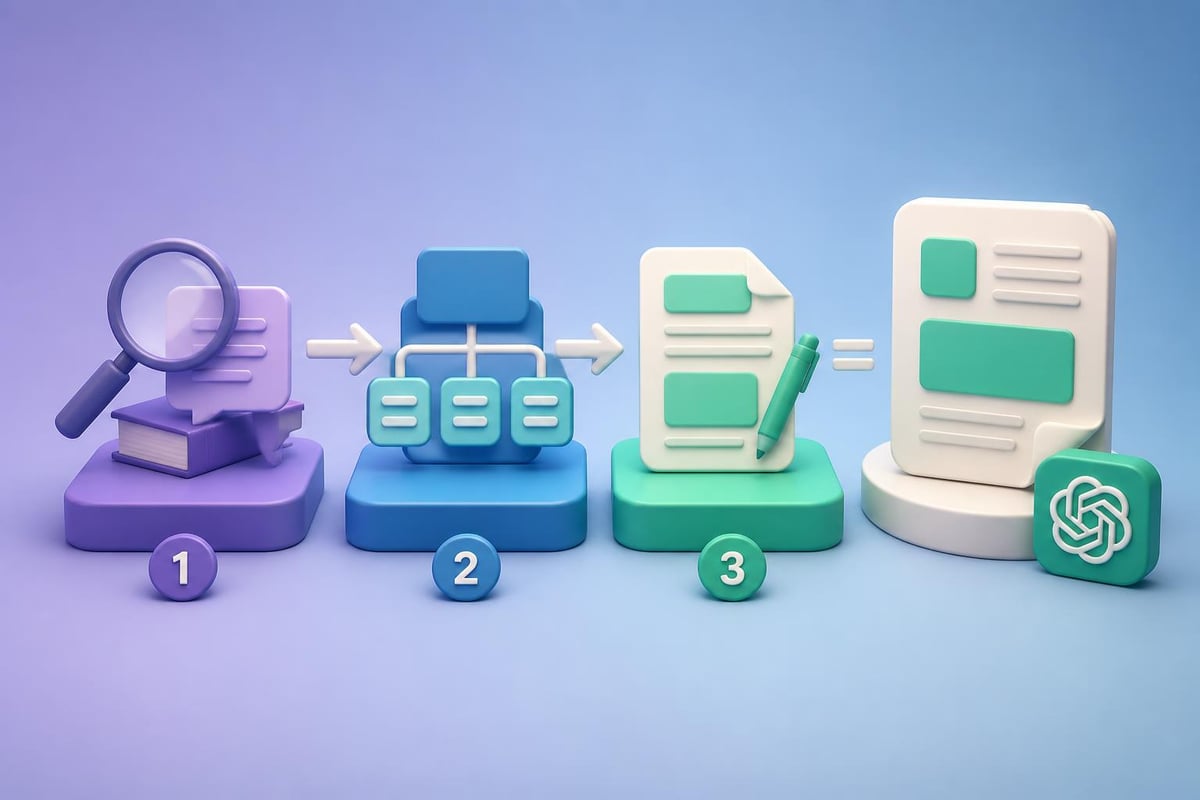
This three-prompt workflow produces significantly better content than asking for a complete article in one go. Breaking it down mirrors how professional writers actually work.
Workflow 2: Customer Feedback Analysis
Step 1 – Categorization:
You are a product manager analyzing customer feedback.

Categorize these 20 customer comments into themes:
[paste comments]

Create categories based on what you see. Name each category and list which comments belong to it.
Step 2 – Priority Analysis:
Based on these categorized themes:
[paste Step 1 output]

Rank them by:
1. Frequency (how often mentioned)
2. Impact (potential effect on retention)
3. Feasibility (rough implementation difficulty)

Create a priority matrix.
Step 3 – Action Planning:
For the top 3 priority items:
[paste top items from Step 2]

Create action plans with:
- Specific solution approach
- Resources needed
- Timeline estimate
- Success metrics

Format as a brief project proposal.
Many professionals use similar approaches when they turn ChatGPT into a personal expert for their specific domain.
Measuring Prompt Effectiveness
You can't improve what you don't measure. Track these metrics for your prompt engineering chatgpt efforts:
| Metric | What It Measures | Good Target |
|---|---|---|
| Revision Rate | How often you need to re-prompt or edit | <20% of prompts need major revision |
| Time to Usable Output | Minutes from first prompt to usable result | <10 minutes for most tasks |
| Direct Usage Rate | Percentage used without editing | >60% for routine tasks |
| Template Reuse | How often you reuse successful prompts | Build library of 10+ reusable templates |
Keep a "prompt library" document. When a prompt works well, save it with notes about the context and results. Over time, you'll build a personal toolkit.
Simple testing approach:
- Write your prompt
- Run it 3 times (ChatGPT has some variability)
- Evaluate if all 3 outputs meet your needs
- If not, refine and test again
- Save successful versions
This iterative refinement is how prompt engineering chatgpt skills develop. You learn what works through experimentation.
Security and Ethical Considerations
As you implement these techniques, keep security in mind. Never include sensitive data in prompts – customer information, proprietary data, passwords, or confidential business details.
Safe practices:
- Use placeholder data for testing prompts
- Anonymize examples before sharing with ChatGPT
- Review outputs before sharing externally
- Be aware of prompt injection risks when building tools
Additionally, maintain transparency when using AI-generated content. If you're using ChatGPT outputs in customer-facing materials, ensure they're accurate and appropriately attributed.
The ethical dimension matters too. Prompt engineering chatgpt shouldn't be about manipulating or deceiving. Use it to enhance your work, not replace critical thinking or human judgment.
Adapting Prompts for Your Industry
Different fields require different approaches. Here's how to customize these techniques.
For Healthcare Professionals
Medical applications need extreme precision. Consider healthcare-specific prompt engineering approaches that emphasize accuracy and evidence-based responses.
You are a medical education specialist creating patient education materials.

Topic: [condition/treatment]

Requirements:
- 6th-grade reading level
- Medically accurate (cite evidence when possible)
- Avoid medical jargon (define necessary terms)
- Include what patients should ask their doctor
- Note warning signs requiring immediate attention

Create a one-page patient handout.
For Sales and Marketing
Focus on persuasion and personalization:
You are a B2B sales professional.

Prospect info:
- Company: [name, industry, size]
- Pain point: [specific challenge]
- Current solution: [what they use now]
- Your unique advantage: [your differentiator]

Write a personalized opening email that:
- References their specific situation
- Demonstrates understanding of their challenge
- Offers one specific insight or value
- Includes a low-friction next step

150 words maximum. No generic sales language.
For Technical Teams
Emphasize precision and implementation details:
You are a senior developer conducting code review.

Review this function:
[paste code]

Provide:
1. Potential bugs or edge cases
2. Performance concerns
3. Security vulnerabilities
4. Readability improvements
5. Alternative approaches to consider

Format as actionable feedback with specific line references.
The key is adapting the framework to your domain's specific needs. Every industry has its own language, priorities, and constraints.
Building a Personal Prompt System
Create your own prompt engineering chatgpt system that grows with your needs. Start with these organizational principles:
Categorize by function:
- Communication (emails, messages, presentations)
- Analysis (data, feedback, research)
- Creation (content, strategies, plans)
- Learning (summaries, explanations, tutorials)
Version your prompts. When you improve a prompt, save it as v2, v3, etc. This lets you track what changes improved results.
Document context. For each saved prompt, note:
- What situation it's for
- What makes it work well
- Common modifications needed
- Example outputs
Resources like Prompt Hero.Ai offer additional tutorials and prompt libraries to expand your capabilities.
Consider keeping prompts in a simple spreadsheet:
| Prompt Name | Category | Use Case | Version | Last Updated |
|---|---|---|---|---|
| Sales Follow-Up Email | Communication | After demo calls | v3 | March 2026 |
| Feature Request Converter | Analysis | Customer feedback processing | v2 | April 2026 |
| Weekly Report Summary | Communication | Team updates | v1 | May 2026 |
This systematic approach transforms random experimentation into a reliable business tool.
Next-Level Techniques
Once you master the basics, these advanced methods unlock even more potential.
Persona Switching
Use different expert personas for different aspects of a problem:
Analyze this business decision from three perspectives:

1. As a CFO focused on financial implications
2. As a customer success manager focused on user experience
3. As an operations director focused on implementation

Decision: [describe decision]

Provide each perspective in 100 words, then synthesize into a recommendation.
This multi-angle approach catches blind spots single-perspective analysis misses.
Iterative Refinement Prompts
Build improvement into the prompt itself:
You are a copywriter improving an email.

Original email:
[paste email]

Improve it in three iterations:

Iteration 1: Improve clarity and structure
Iteration 2: Enhance persuasiveness and emotional appeal
Iteration 3: Optimize for conciseness

Show all three versions with brief notes on what changed.
You can explore more transformative prompting approaches that take learning and refinement to the next level.
Meta-Prompting
Ask ChatGPT to improve your prompts:
I'm trying to get ChatGPT to [desired outcome].

My current prompt is:
[paste your prompt]

Analyze this prompt and suggest improvements for:
- Clarity of instructions
- Specificity of requirements
- Structure and organization
- Missing context that would improve output

Then provide a revised version.
This self-improving approach helps you learn prompt engineering chatgpt principles faster.
Practical Tips for Daily Use
Implementation matters as much as technique. These habits make prompt engineering part of your workflow:
Start simple. Don't try to write the perfect prompt on the first attempt. Start basic, review the output, then refine.
Build prompt templates. For recurring tasks, create fill-in-the-blank templates. This reduces cognitive load and ensures consistency.
Keep a feedback loop. When a prompt produces great results, note why it worked. When it fails, understand what was missing.
Share with your team. The best prompts are collaborative. When someone finds an effective approach, everyone benefits.
Stay current. ChatGPT's capabilities evolve. Prompts that work well in 2026 might need adjustment as the model improves.
Test with edge cases. Don't just test prompts with ideal scenarios. See how they handle unusual situations or incomplete information.
Mastering prompt engineering chatgpt transforms ChatGPT from a general assistant into a specialized tool for your specific needs. The techniques, templates, and workflows in this guide give you a foundation to build more effective prompts immediately. When you're ready to take your AI skills further with structured learning and certification, Prompt Hero.Ai offers step-by-step tutorials, ready-to-use prompts, and practical examples designed specifically for professionals looking to leverage AI tools in their daily work.