
Engineering in AI represents a fundamental shift in how we build intelligent systems for real-world applications. Unlike traditional software development, engineering in AI requires a structured approach that combines data management, model design, deployment strategies, and continuous monitoring. This tutorial walks you through the core principles and practical techniques professionals use to build AI systems that actually work in production environments.
What Engineering in AI Really Means
Engineering in AI is the discipline of designing, developing, and maintaining AI systems that solve specific business problems. It's not just about training models or writing prompts. It's about creating reliable, scalable systems that integrate into existing workflows.
The field encompasses several key areas:
- Data pipeline engineering for collecting and processing information
- Model selection and fine-tuning for specific use cases
- Prompt engineering for generative AI applications
- Deployment strategies for production environments
- Monitoring and maintenance for long-term performance
Traditional engineering focuses on deterministic systems where the same input always produces the same output. Engineering in AI deals with probabilistic systems that learn from data and adapt over time. This fundamental difference requires new approaches to testing, validation, and quality assurance.

Building Your First AI-Engineered Solution
Let's walk through a practical example: automating customer support ticket classification. This common business problem demonstrates core engineering in AI principles.
Step 1: Define the Problem Scope
Start by identifying exactly what you need the AI to do. For ticket classification, you might want to:
- Categorize incoming tickets by department (Sales, Technical, Billing)
- Assign priority levels (Low, Medium, High, Urgent)
- Extract key information (product names, error codes, customer sentiment)
Step 2: Design Your Data Structure
Create a consistent format for your AI system to work with. Here's a sample ticket structure:
| Field | Type | Purpose |
|---|---|---|
| ticket_id | String | Unique identifier |
| subject | String | Ticket headline |
| body | String | Full customer message |
| category | String | Department assignment |
| priority | String | Urgency level |
| extracted_info | Object | Key details pulled from text |
Step 3: Build the Classification Prompt
Engineering in AI for generative models relies heavily on well-structured prompts. Here's a production-ready example:
You are a customer support ticket classifier. Analyze the ticket below and return a JSON response with category, priority, and extracted information.

Categories: Sales, Technical, Billing, General
Priority levels: Low, Medium, High, Urgent

Ticket Subject: {subject}
Ticket Body: {body}

Return format:
{
  "category": "category_name",
  "priority": "priority_level",
  "extracted_info": {
    "product": "product_name_if_mentioned",
    "error_code": "code_if_present",
    "sentiment": "positive/neutral/negative"
  },
  "reasoning": "brief explanation"
}
Step 4: Test and Validate
Run your prompt against sample tickets. Here's a real example:
Input Ticket:
- Subject: "Can't log into my account after password reset"
- Body: "I reset my password 30 minutes ago but keep getting 'invalid credentials' error. I need to access my dashboard urgently for a client meeting in 1 hour."
Output:
{
  "category": "Technical",
  "priority": "Urgent",
  "extracted_info": {
    "product": "account/login system",
    "error_code": "invalid credentials",
    "sentiment": "negative"
  },
  "reasoning": "Login issue preventing urgent work access requires immediate technical support"
}
Advanced Engineering Patterns
Once you've mastered basic implementation, engineering in AI involves more sophisticated patterns for production systems.
Error Handling and Fallbacks
AI systems fail differently than traditional software. Build multiple layers of validation:
- Output format validation to ensure JSON structure is correct
- Confidence scoring to flag uncertain classifications
- Human-in-the-loop fallbacks for edge cases
- Automatic retries with adjusted prompts
For our ticket system, add this validation prompt when confidence is low:
The previous classification had low confidence. Review this ticket again focusing on these specific indicators:

For Technical issues: error messages, system behavior, technical terms
For Sales issues: pricing questions, product comparisons, purchase intent
For Billing issues: payment, invoices, charges, refunds

Ticket: {original_ticket}
Previous classification: {previous_result}

Provide a revised classification or confirm the original with specific evidence.
Chain-of-Thought Engineering
Complex problems benefit from breaking AI reasoning into steps. This technique, central to engineering in AI, improves accuracy significantly.
Here's how to restructure the ticket classifier:
- First pass: Extract all mentioned products, error codes, and keywords
- Second pass: Analyze sentiment and urgency indicators
- Third pass: Match patterns to categories based on extracted information
- Final pass: Assign priority based on urgency signals and category
Implementing chains requires careful prompt design. Each step's output becomes the next step's input, creating a pipeline of specialized operations.

Integration and Deployment Strategies
Engineering in AI extends beyond model performance to system integration. Your AI component needs to work within existing infrastructure.
API-First Design
Wrap your AI logic in a clean API interface:
| Endpoint | Method | Purpose |
|---|---|---|
| /classify | POST | Process single ticket |
| /batch | POST | Process multiple tickets |
| /feedback | POST | Submit correction for learning |
| /health | GET | System status check |
This separation allows you to swap AI providers (ChatGPT to Claude, for example) without changing other systems. It's a crucial principle that engineering approaches for AI systems emphasize repeatedly.
Monitoring and Metrics
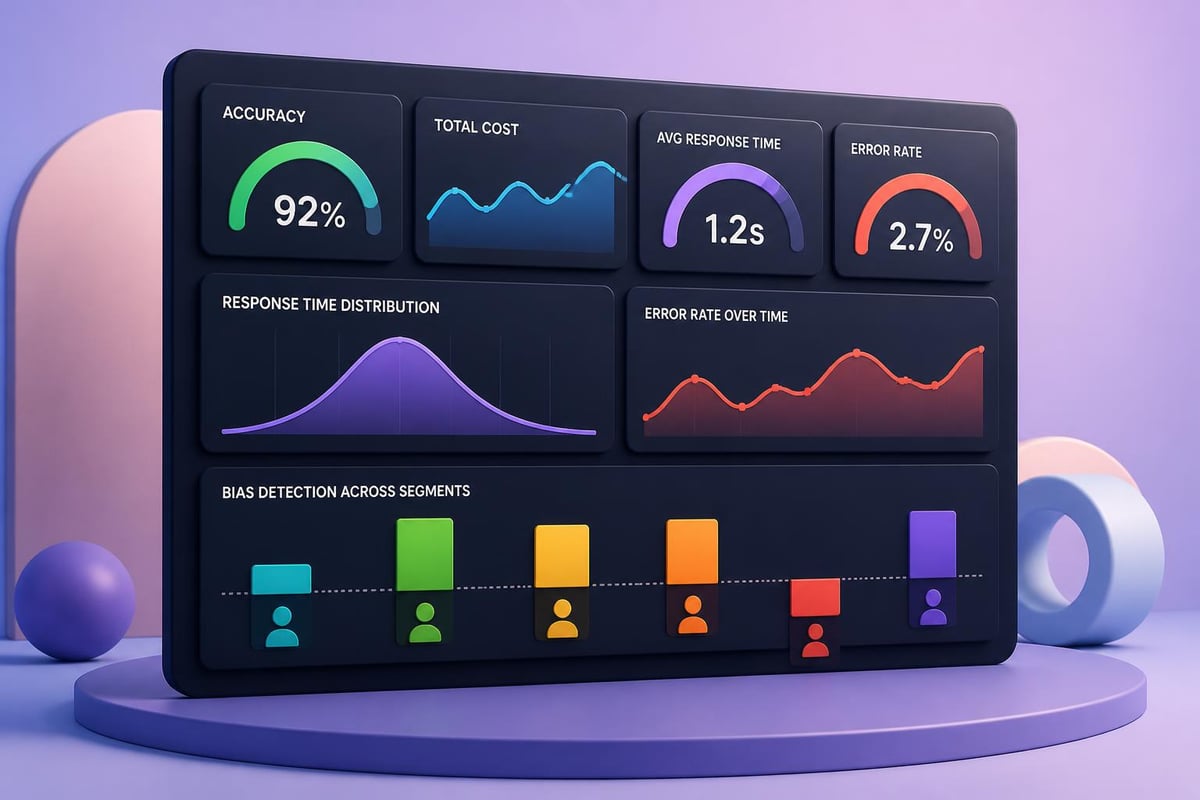
Track these key performance indicators:
- Classification accuracy (validate against human reviews)
- Response time (P50, P95, P99 latency)
- Cost per classification (API token usage)
- Error rate (failed requests, invalid outputs)
- Confidence distribution (how certain is your AI?)
Set up automated alerts when metrics drift outside acceptable ranges. Engineering in AI requires constant vigilance because model behavior can change over time.
Prompt Engineering as Code
Treat your prompts like production code. Apply software engineering best practices:
Version control your prompts. Store them in Git with clear version numbers and change logs. When classification accuracy drops, you can roll back to previous versions.
Use template systems. Don't embed prompts in application code. Store them separately with variable placeholders:
{{system_role}}

Classify this support ticket:
Subject: {{ticket.subject}}
Body: {{ticket.body}}
History: {{ticket.previous_interactions}}

{{output_format}}
{{category_definitions}}
A/B test prompt variations. Run competing prompt versions on production traffic and measure which performs better. This data-driven approach to prompt engineering for ChatGPT separates effective systems from unreliable ones.
Many professionals enhance their engineering in AI skills through structured learning programs. Mammoth Club’s AI certification courses provide comprehensive training on building production-ready AI systems, covering everything from prompt optimization to deployment strategies with hands-on projects.

Real-World Engineering Challenges
Engineering in AI presents unique obstacles that don't exist in traditional software development.
The Context Window Problem
AI models have limited context windows. For long documents or extensive conversation history, you need engineering solutions:
- Summarization pipelines that condense information
- Chunking strategies that process documents in segments
- Semantic search to retrieve only relevant context
- Rolling context windows that prioritize recent information
A ticket with 50 previous customer interactions won't fit in most context windows. Engineer a solution that extracts key facts from history rather than including everything.
Cost Optimization
Every AI API call costs money. Engineering in AI includes optimizing for cost:
| Strategy | Savings Potential | Implementation Effort |
|---|---|---|
| Caching common queries | 30-50% | Low |
| Batch processing | 20-40% | Medium |
| Smaller model for simple tasks | 40-60% | Medium |
| Local model hosting | 60-80% | High |
For ticket classification, cache results for identical or near-identical tickets. Implement fuzzy matching to detect similar issues before making API calls.
Bias and Fairness
AI systems can perpetuate or amplify biases in training data. Engineering in AI requires proactive fairness testing:
- Test across demographic groups to ensure equal performance
- Monitor for systematic errors in specific categories
- Implement bias detection in your validation pipeline
- Create diverse test sets that represent real-world variety
For customer support, verify that tickets from different customer segments receive appropriate priority and routing regardless of writing style or language proficiency.
Building Resilient AI Systems
Reliability distinguishes hobby projects from production engineering in AI. Your system needs to handle failures gracefully.
Graceful Degradation
Design fallback behaviors for different failure modes:
- API timeout: Return cached result or route to human review
- Invalid JSON response: Parse what's possible, flag for review
- Low confidence: Escalate to senior support staff
- Rate limiting: Queue requests or switch to backup model
Never let an AI failure break your entire workflow. Traditional software engineering principles about fault tolerance apply doubly to AI systems.
Continuous Learning Loops
Static AI systems degrade over time as business needs evolve. Build feedback mechanisms:
- Collect correction data when humans override AI decisions
- Analyze failure patterns weekly or monthly
- Update prompts based on new edge cases discovered
- Retrain or fine-tune models when available
- Measure improvement against baseline metrics
Engineering in AI isn't a one-time project. It's an ongoing process of refinement and adaptation. Carnegie Mellon’s AI Engineering research emphasizes this iterative approach to building trustworthy systems.
Integration with Existing Tools
Most businesses don't start from scratch. Engineering in AI often means augmenting current systems.
Workflow Integration Points
Identify where AI adds the most value in existing processes:
- Pre-processing: Clean and structure data before human review
- Decision support: Provide recommendations, not final answers
- Automation: Handle routine cases, escalate complex ones
- Quality assurance: Flag potential errors in human work
For ticket systems, integrate at the intake stage. AI classifies incoming tickets, but support staff can override. Track override rates to measure accuracy and identify improvement areas.
Data Flow Architecture
Map how information moves through your AI-enhanced system:
- Ticket arrives via email, web form, or chat
- Preprocessing extracts text and metadata
- AI classification API receives structured data
- Results stored in database with confidence scores
- Ticket routed based on classification
- Support staff receives ticket with AI insights
- Human decisions fed back to improvement pipeline
This architecture, common in modern AI engineering practices, ensures AI enhances rather than replaces human expertise.
Testing and Quality Assurance
Traditional unit tests don't fully capture AI system behavior. Engineering in AI requires specialized testing approaches.
Test Data Sets
Build comprehensive test collections:
- Golden set: Hand-labeled examples for accuracy benchmarking
- Edge cases: Unusual tickets that confuse the AI
- Adversarial examples: Deliberately tricky inputs
- Production samples: Real tickets from your actual workflow
Aim for 100+ examples minimum, covering all categories and priority levels. Update this set monthly as new patterns emerge.
Regression Testing
When you update prompts or switch models, verify you haven't broken existing functionality:
Compare new model performance against baseline:

Test Set: 500 previously classified tickets
Baseline accuracy: 92.3%
New model accuracy: 94.1%
Improvement: +1.8%

Category breakdown:
- Technical: 95% → 96% (+1%)
- Sales: 91% → 93% (+2%)
- Billing: 93% → 95% (+2%)
- General: 89% → 92% (+3%)

Proceed with deployment: Yes
Document every change with performance data. This discipline, emphasized in AI system requirements frameworks, prevents quality degradation over time.
Scaling Considerations
As usage grows, engineering in AI faces new challenges. Plan for scale from the start.
Performance Optimization
Strategies for handling high volume:
- Batch processing during off-peak hours
- Asynchronous processing for non-urgent classifications
- Response caching with time-based expiration
- Load balancing across multiple AI providers
- Local model deployment for latency-sensitive operations
Monitor your cost per classification. As volume increases, hosting your own model often becomes economical despite higher upfront investment.
Multi-Model Strategies
Don't rely on a single AI provider. Engineering in AI increasingly involves orchestrating multiple models:
| Use Case | Primary Model | Fallback | Reasoning |
|---|---|---|---|
| Simple tickets | GPT-3.5 | Claude Haiku | Cost optimization |
| Complex analysis | GPT-4 | Claude Opus | Accuracy priority |
| High volume | Local fine-tuned | GPT-3.5 | Cost and speed |
Route requests based on complexity, urgency, and current provider availability. This resilience pattern protects against outages and rate limits.
Security and Privacy
Engineering in AI systems that handle sensitive data requires strong security practices.
Data Handling Protocols
Implement these safeguards:
- Redact PII before sending to AI APIs (names, addresses, payment info)
- Encrypt data in transit and at rest
- Audit logs for all AI processing activities
- Access controls limiting who can modify prompts or see results
- Retention policies for AI inputs and outputs
For customer tickets, replace actual names with placeholders before classification. The AI doesn't need personal details to categorize issues.
Compliance Considerations
Different industries face different requirements:
- HIPAA for healthcare data (use compliant AI providers)
- GDPR for European customer data (right to explanation)
- SOC 2 for enterprise software (audit trails)
- PCI DSS for payment information (never send card numbers)
Engineering in AI means understanding regulatory constraints and building compliant systems from day one.
Getting Started Today
You don't need a large team or massive budget to begin engineering in AI. Start small and iterate.
Minimum Viable AI System
Launch with these components:
- One specific use case (like ticket classification)
- A well-tested prompt template
- Basic API integration
- Manual validation for the first 100 predictions
- Simple monitoring (accuracy, cost, speed)
Expand only after proving value. Many failed AI projects tried to solve everything at once.
Learning Path
Build skills progressively:
- Week 1-2: Master prompt engineering fundamentals through practical tutorials
- Week 3-4: Implement your first production prompt with validation
- Week 5-6: Add error handling and monitoring
- Week 7-8: Optimize costs and performance
- Month 3+: Explore fine-tuning and advanced architectures
University programs like Maryland’s AI Engineering degree provide comprehensive academic foundations, but practical experience building real systems teaches essential lessons faster.
Measuring Success
Define clear metrics before building. Engineering in AI requires objective success criteria.
Business Impact Metrics
Track these outcomes:
- Time saved: Hours of manual work eliminated per week
- Cost reduction: Money saved on labor or operations
- Quality improvement: Error rates before and after AI
- Customer satisfaction: NPS or support ratings changes
- Revenue impact: Sales or conversions influenced by AI
For ticket classification, measure average time-to-resolution. If AI routing reduces this by 20%, quantify the business value of faster customer service.
Technical Performance Metrics
Monitor system health:
- Accuracy: Percentage of correct classifications
- Latency: Time from request to response (P95)
- Availability: System uptime percentage
- Cost per operation: Total spend divided by requests
- Confidence calibration: How well confidence scores predict accuracy
Set thresholds and alerts. If accuracy drops below 90%, investigate immediately. Industry research on AI engineering shows that proactive monitoring prevents small issues from becoming major failures.
Engineering in AI transforms how businesses solve problems, but success requires more than just using powerful models. It demands structured approaches to prompt design, system integration, monitoring, and continuous improvement. Start with one specific use case, validate thoroughly, and expand systematically. Ready to build production-ready AI systems for your business? Prompt Hero.Ai provides step-by-step tutorials with copy-paste prompts and real examples that help you implement these engineering principles today.