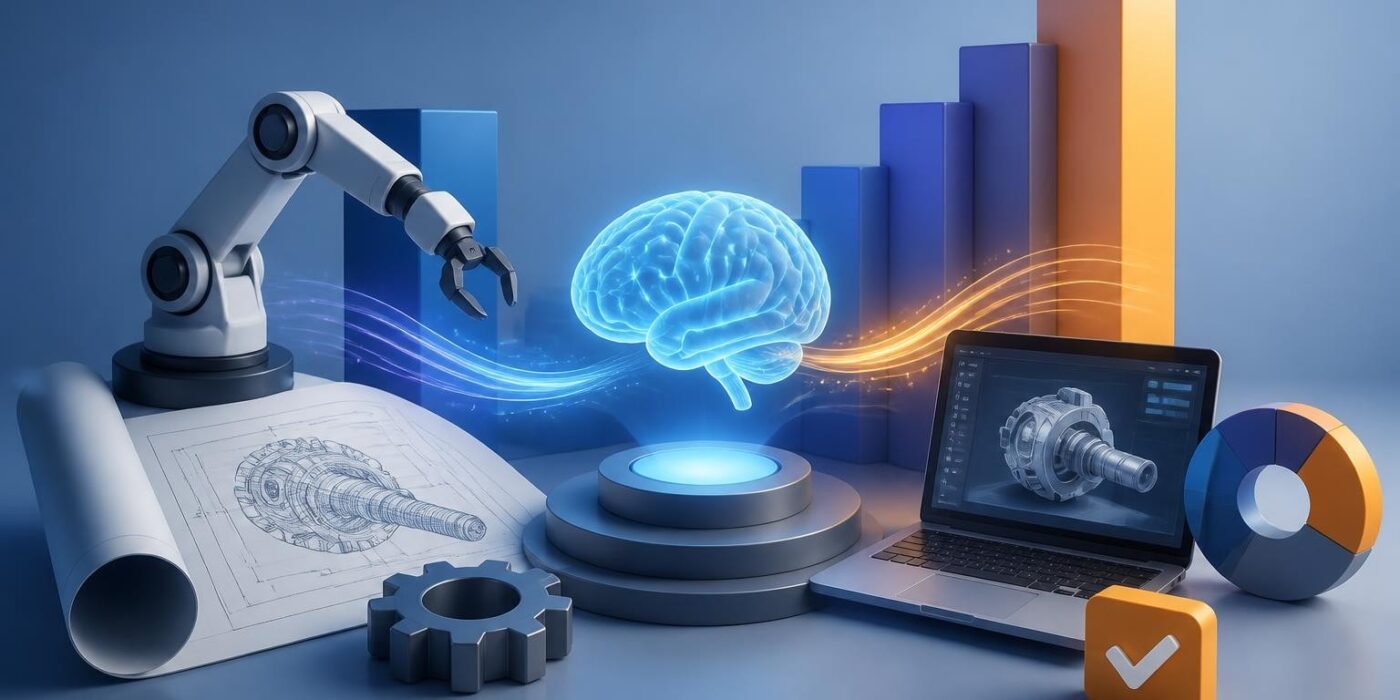
The intersection of engineering and AI has evolved from experimental research to practical necessity in 2026. Engineers across disciplines now leverage AI tools to automate calculations, optimize designs, analyze massive datasets, and solve complex problems that would take humans months to complete manually. This shift represents more than just technological advancement-it's a fundamental change in how engineers approach problem-solving, collaborate with machines, and deliver results in increasingly competitive markets.
Understanding the Engineering and AI Integration Landscape
Engineering and AI integration spans multiple dimensions, from simple automation tasks to complex decision-making systems. Modern engineers use AI not to replace human expertise but to amplify it, handling repetitive tasks while freeing professionals to focus on creative problem-solving and strategic decisions.
The scope of AI applications in engineering now includes structural analysis, materials science, systems optimization, quality control, and predictive maintenance. Each application area requires different AI approaches, from machine learning models to natural language processing tools that help engineers extract insights from technical documentation.
Key Categories of Engineering and AI Applications
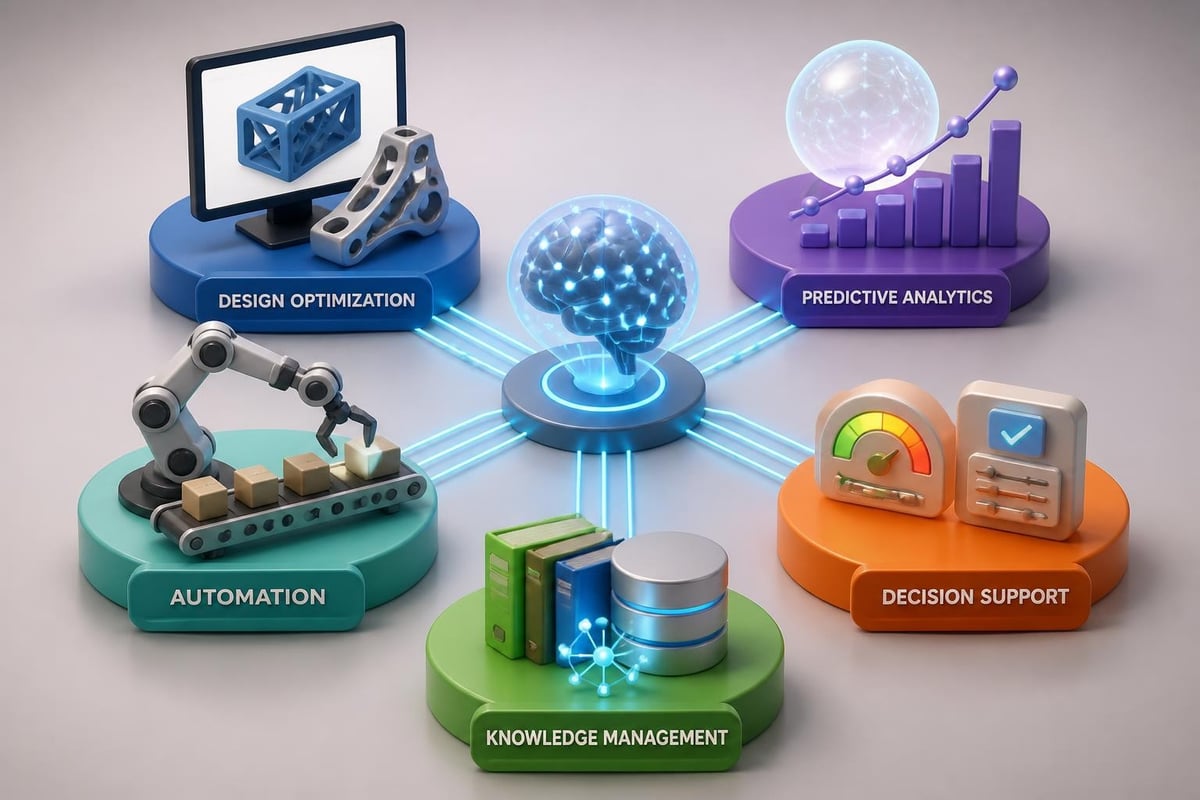
Engineering and AI applications fall into several distinct categories, each serving specific professional needs:
- Design Optimization: AI algorithms test thousands of design variations to find optimal solutions based on specified constraints
- Predictive Analytics: Machine learning models forecast equipment failures, material behavior, and system performance before issues arise
- Automation: AI handles routine calculations, code generation, documentation, and data processing tasks
- Decision Support: AI systems analyze complex data sets to provide engineers with actionable recommendations
- Knowledge Management: Natural language processing tools help engineers search, organize, and extract insights from technical libraries
What makes these applications practical in 2026 is their accessibility. Engineers no longer need advanced programming skills to implement AI solutions. Tools like ChatGPT and Claude now serve as interfaces between engineering problems and AI capabilities, allowing professionals to describe their needs in plain language and receive working solutions.
Implementing AI Tools in Engineering Workflows
The practical implementation of engineering and AI solutions starts with identifying repetitive, time-consuming tasks that follow logical patterns. These tasks become prime candidates for AI automation because they provide clear value while minimizing implementation complexity.
Step-by-Step AI Integration Process
Step 1: Identify High-Impact Tasks
Begin by auditing your daily engineering activities. Document tasks that consume significant time but follow predictable patterns-data entry, calculation verification, report generation, or literature reviews.
Step 2: Select Appropriate AI Tools
Match tasks to available AI capabilities. ChatGPT excels at text-based tasks like documentation and code generation, while Claude handles complex reasoning and analysis. Specialized AI platforms address domain-specific needs like finite element analysis or circuit design.
Step 3: Create Reusable Prompts
Develop standardized prompts that consistently produce quality results. A structural engineer might create a prompt template for calculating beam loads, while an electrical engineer develops prompts for circuit analysis.
| Engineering Discipline | Common AI Task | Tool Recommendation | Time Savings |
|---|---|---|---|
| Civil Engineering | Load calculations and verification | ChatGPT/Claude | 60-70% |
| Mechanical Engineering | Material property research | GPT-4 with plugins | 50-60% |
| Electrical Engineering | Code documentation | GitHub Copilot | 40-50% |
| Chemical Engineering | Literature review synthesis | Claude | 70-80% |
Step 4: Validate AI Outputs
Never skip human verification. AI tools make mistakes, especially with complex calculations or when working with outdated training data. Establish verification protocols that check AI outputs against known solutions or industry standards.
Step 5: Iterate and Refine
AI implementation improves through continuous refinement. Track which prompts produce the best results, document failures, and adjust your approach based on real-world performance.
For professionals looking to systematically develop these skills, Mammoth Club’s AI certification program offers comprehensive training specifically designed for engineers who want to integrate AI tools into their daily workflows without becoming programmers.
Real-World Applications Across Engineering Disciplines
Engineering and AI applications vary significantly across disciplines, but common patterns emerge when examining successful implementations. Engineers who achieve the best results focus on specific use cases rather than attempting broad transformations.
Civil and Structural Engineering Applications
Structural engineers now use AI to accelerate design iterations and safety verification. A bridge design project that once required weeks of manual calculations can be optimized in days using AI-powered generative design tools that explore thousands of structural configurations while maintaining safety factors.
Predictive maintenance represents another breakthrough. AI models trained on sensor data from existing infrastructure predict structural degradation, allowing engineers to schedule maintenance before failures occur. This approach has reduced unexpected infrastructure failures by 40-50% in municipalities using AI monitoring systems.
Practical example: A transportation engineer uses ChatGPT to generate initial traffic flow models by describing intersection geometry and traffic patterns. The AI produces Python code that simulates traffic scenarios, which the engineer then refines and validates against real-world data.
Mechanical and Manufacturing Engineering
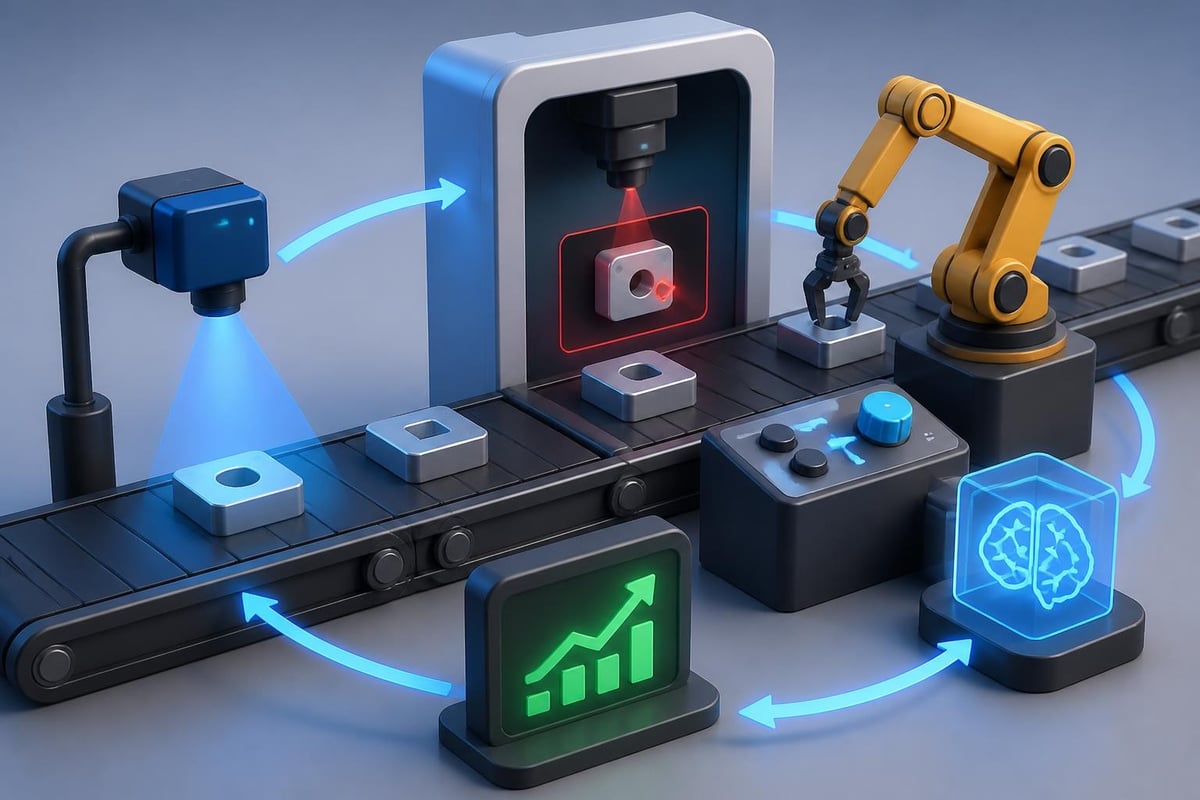
Manufacturing engineers leverage AI for quality control, process optimization, and design refinement. Computer vision systems powered by AI detect defects invisible to human inspectors, while machine learning models optimize production parameters in real-time.
The research on human-AI collaboration in additive manufacturing demonstrates how engineers extract insights from complex manufacturing data using large language models, transforming raw sensor readings into actionable process improvements.
- Tolerance analysis automation: AI checks designs against manufacturing capabilities
- Supply chain optimization: Machine learning predicts material availability and costs
- Energy efficiency: AI models identify opportunities to reduce power consumption
- Maintenance scheduling: Predictive algorithms minimize downtime
Electrical and Software Engineering
Software engineers were early adopters of AI coding assistants, but electrical engineers now apply similar tools to circuit design, signal processing, and system integration. AI helps translate high-level specifications into detailed schematics, suggests component alternatives based on availability and cost, and identifies potential design flaws before prototyping.
The convergence of engineering and AI appears most clearly in embedded systems, where engineers use AI tools to optimize firmware, predict system behavior under various conditions, and generate test cases that would take weeks to develop manually.
Overcoming Common Engineering and AI Implementation Challenges
Despite the clear benefits, engineers face several obstacles when integrating AI into their workflows. Understanding these challenges and their solutions accelerates successful adoption.
Data Quality and Availability
AI models require quality data to produce reliable results. Many engineering firms struggle with fragmented data systems, inconsistent documentation, and proprietary information silos that prevent effective AI training.
Solution approach: Start with projects where data already exists in structured formats. Use AI to analyze existing reports, specifications, and test results before attempting to create new data collection systems. Focus on improving data organization gradually rather than attempting comprehensive overhauls.
Trust and Verification
Engineers bear professional responsibility for their work, creating understandable hesitation about relying on AI systems that function as "black boxes." This concern intensifies in safety-critical applications where failures have serious consequences.
| Challenge | Traditional Approach | AI-Enhanced Approach | Verification Method |
|---|---|---|---|
| Load calculations | Manual/spreadsheet | AI verification | Independent calculation spot-check |
| Design review | Human team review | AI + human review | AI identifies issues, human validates |
| Code quality | Peer review | AI analysis + peer review | Automated testing suite |
| Documentation | Manual writing | AI drafting + human editing | Technical accuracy review |
The most successful engineering and AI implementations treat AI as a junior engineer whose work requires review rather than a replacement for human expertise. This mental model helps teams establish appropriate verification protocols while capturing AI's efficiency benefits.
Skills and Training Gaps
Many engineers completed their education before AI tools became practical, creating knowledge gaps about effective AI utilization. Organizations face the challenge of upskilling existing teams while maintaining productivity.
Progressive firms address this through structured AI training programs that teach prompt engineering, AI tool selection, and output verification specifically for engineering contexts. These programs focus on practical applications rather than theoretical AI concepts, allowing engineers to generate value quickly.
Building Systematic Approaches to Engineering and AI
The systematic framework for engineering AI solutions emphasizes the importance of structured methodologies when implementing AI in engineering contexts. Ad-hoc approaches produce inconsistent results and create maintenance challenges as teams scale their AI usage.
Creating AI Prompt Libraries
Professional engineers benefit from building organizational prompt libraries-collections of tested, documented prompts for common tasks. These libraries serve multiple purposes:
They standardize quality by ensuring all team members use proven approaches. A mechanical engineering team might maintain prompts for thermal analysis, stress calculations, and materials research, with each prompt documented with use cases, limitations, and expected output formats.
They accelerate onboarding by giving new team members immediate access to AI capabilities. Instead of spending weeks learning how to craft effective prompts, engineers can start with templates and gradually customize them.
They enable continuous improvement through version control and feedback loops. Teams track which prompts produce the best results, retire ineffective approaches, and share successful innovations across departments.
Establishing AI Governance Frameworks
As AI becomes integral to engineering workflows, organizations need governance frameworks that address intellectual property, liability, data security, and professional standards.
Key governance elements:
- Output verification protocols specifying who reviews AI work and how
- Data handling policies defining what information can be shared with AI tools
- Documentation requirements ensuring AI-assisted work is properly attributed
- Quality standards establishing acceptable error rates and validation methods
- Update procedures managing changes when AI tools update or change behavior
Yale Engineering’s exploration of AI applications across disciplines highlights how different engineering fields require tailored governance approaches based on their specific risk profiles and regulatory requirements.
Advanced Engineering and AI Collaboration Techniques
Beyond basic automation, advanced engineering and AI collaboration involves using AI systems as active participants in the engineering process. This represents a shift from AI as tool to AI as collaborator.
Iterative Design Refinement
Engineers now engage in dialogue with AI systems, proposing initial concepts and receiving suggestions, constraints, and alternatives. This conversational approach mirrors how engineers traditionally collaborate with colleagues but operates at machine speed.
A thermal engineer designing a cooling system might describe performance requirements to an AI system, which generates initial concepts. The engineer critiques these concepts, explaining real-world constraints the AI missed. The AI revises its approach, and through several iterations, engineer and AI converge on an optimal solution neither would have reached independently.
Knowledge Synthesis and Research Acceleration
Modern engineering projects require synthesizing information from hundreds of technical papers, standards documents, and case studies. AI excels at this synthesis work, identifying patterns and connections across vast literature bases.
Practical implementation involves using AI to:
- Summarize recent research relevant to specific engineering challenges
- Identify contradictions or gaps in existing technical literature
- Extract specific data points (material properties, performance specifications) from multiple sources
- Generate comparative analyses of different technical approaches
The research agenda for engineering AI systems emphasizes structured approaches to these knowledge management challenges, providing frameworks engineers can adapt to their specific domains.
Scenario Analysis and Risk Assessment
AI's ability to rapidly model multiple scenarios makes it valuable for risk assessment and contingency planning. Engineers describe potential failure modes or operating conditions, and AI systems model outcomes, identify vulnerabilities, and suggest mitigation strategies.
This capability proves particularly valuable in complex systems where interactions between components create non-obvious failure paths. AI can explore thousands of scenario combinations, highlighting edge cases human engineers might overlook.
Measuring ROI and Impact of Engineering and AI Initiatives
Organizations investing in engineering and AI capabilities need clear metrics to evaluate success and justify continued investment. Traditional productivity metrics apply, but AI implementations also create value through quality improvements and capability expansion.
Quantitative Metrics
Direct time savings provide the most obvious metric. Track how long tasks took before AI implementation and compare to current durations. Most organizations see 40-60% time reductions on tasks well-suited to AI assistance.
Error reduction represents another measurable benefit. AI-verified calculations typically show 30-50% fewer errors than purely manual work, though this assumes proper verification protocols.
| Metric Category | What to Measure | Typical Improvement | Measurement Method |
|---|---|---|---|
| Efficiency | Hours per deliverable | 40-60% reduction | Time tracking comparison |
| Quality | Error rate in calculations | 30-50% reduction | Quality audit results |
| Throughput | Projects completed per quarter | 25-40% increase | Project management data |
| Learning | Time to competency for new engineers | 20-35% reduction | Training completion metrics |
Qualitative Benefits
Some benefits resist quantification but significantly impact organizational capability. Engineers report higher job satisfaction when AI handles tedious tasks, allowing them to focus on creative problem-solving. Teams also develop new capabilities-taking on project types previously considered too complex or time-intensive.
Innovation acceleration represents another qualitative benefit. When engineers spend less time on routine work, they have more capacity for exploring novel approaches and developing innovative solutions.
Preparing for the Future of Engineering and AI
The trajectory of engineering and AI integration suggests several developments engineers should prepare for now. Understanding these trends helps professionals and organizations position themselves advantageously.
Increasing AI Autonomy
Current AI tools require significant human direction, but emerging systems handle increasingly complex tasks with minimal supervision. Engineers will shift from directing AI step-by-step to defining objectives and constraints while AI determines implementation approaches.
This transition requires developing new skills-less about knowing specific procedures and more about defining problems clearly, evaluating AI proposals critically, and maintaining deep enough technical understanding to catch AI mistakes.
Domain-Specific AI Models
Generic AI models like ChatGPT serve many purposes, but the future includes specialized models trained on engineering-specific data. These domain models will understand technical terminology, apply industry standards correctly, and produce outputs requiring less verification.
Early examples already exist in software engineering, where AI models trained on millions of code repositories understand programming patterns deeply. Similar specialization will emerge across all engineering disciplines.
Regulatory Evolution
Professional engineering regulations will adapt to address AI's role in engineering work. Questions about liability, professional responsibility, and acceptable AI usage will drive new standards and practices.
Forward-thinking engineers stay informed about regulatory developments in their jurisdictions and participate in professional organizations shaping these standards. The examination of artificial collective intelligence concepts provides insights into how regulatory frameworks might address increasingly autonomous AI systems.
Integration with Physical Systems
Engineering and AI integration will extend beyond design and analysis into physical systems. AI-controlled manufacturing equipment, autonomous inspection systems, and self-optimizing infrastructure will require engineers who understand both traditional engineering principles and AI capabilities.
This convergence creates opportunities for engineers willing to develop hybrid expertise, understanding physical systems and the AI systems that increasingly control them.
Engineering and AI integration has moved from experimental to essential in 2026, transforming how professionals approach design, analysis, and problem-solving across all engineering disciplines. The most successful implementations focus on practical applications, maintain rigorous verification standards, and treat AI as a collaborative tool rather than a replacement for human expertise. Whether you're looking to automate routine calculations, accelerate research, or explore new design approaches, Prompt Hero.Ai provides the practical tutorials and ready-to-use prompts that help engineers immediately apply AI tools to real-world challenges. Start with specific, high-impact tasks, build your skills systematically, and join the growing community of engineers leveraging AI to deliver better results faster.