
Learning artificial intelligence has become essential for professionals across industries in 2026. Many learners turn to online platforms for structured education, and Javatpoint artificial intelligence tutorials have emerged as a popular starting point for beginners. Understanding how these resources fit into your broader learning strategy requires evaluating their strengths, limitations, and how they complement other modern AI education approaches. This comprehensive guide explores what Javatpoint offers, how to maximize its value, and which additional resources will accelerate your journey toward practical AI skills.
What Javatpoint Artificial Intelligence Tutorials Offer
Javatpoint provides free, text-based tutorials covering fundamental AI concepts. The platform structures content into digestible sections that introduce core topics systematically.
Core Topics Covered:
- Introduction to artificial intelligence and its history
- Machine learning fundamentals and algorithms
- Neural networks and deep learning basics
- Natural language processing concepts
- Expert systems and knowledge representation
- Search algorithms and problem-solving techniques
The javatpoint artificial intelligence section emphasizes theoretical understanding before practical implementation. Each topic includes definitions, explanations, and conceptual diagrams that help beginners grasp foundational principles. The platform uses simple language and avoids unnecessary jargon, making complex topics accessible to newcomers.
Tutorial Structure and Learning Approach
Javatpoint organizes content linearly, starting with basic definitions and progressing toward more advanced topics. This sequential approach works well for learners who prefer structured pathways over self-directed exploration.
The tutorials typically include:
- Clear definitions of key terms
- Explanatory paragraphs breaking down concepts
- Diagrams illustrating relationships between components
- Code snippets demonstrating basic implementations
- Navigation between related topics
However, the platform focuses primarily on conceptual knowledge rather than hands-on practice. While you'll understand what neural networks are, you won't necessarily learn how to build production-ready models from these tutorials alone.

Strengths and Limitations for Modern AI Learning
Understanding where javatpoint artificial intelligence tutorials excel helps you use them effectively within a comprehensive learning strategy.
| Strength | Limitation |
|---|---|
| Free access to foundational content | Limited hands-on coding exercises |
| Clear explanations for beginners | Minimal real-world business applications |
| Comprehensive topic coverage | Content updates lag behind latest AI developments |
| No registration required | No interactive learning features |
| Mobile-friendly text format | Lacks community support or Q&A |
When Javatpoint Works Best
The platform excels as a reference resource when you need quick conceptual refreshers. If you're preparing for interviews or need to understand AI terminology before a meeting, Javatpoint provides rapid access to definitions and explanations.
Ideal Use Cases:
- Building conceptual foundations before diving into practical tools
- Quick reference for algorithm definitions or terminology
- Supplementary reading alongside hands-on courses
- Understanding theoretical basics before implementation
Many professionals find that platforms like IBM Developer offer more comprehensive guides for building AI agents and integrating AI into real applications, especially when you need production-ready solutions.
Where Additional Resources Become Essential
Javatpoint artificial intelligence content covers theory effectively but doesn't replace hands-on practice with modern tools. In 2026, professionals need to work directly with AI platforms like ChatGPT, Claude, and custom models to solve business problems.
Critical Gaps:
- No prompt engineering tutorials for modern language models
- Limited coverage of AI automation workflows
- Minimal business case studies or ROI analysis
- Outdated code examples for legacy frameworks
- No guidance on AI ethics or responsible implementation
Platforms like Applied AI Tutorials provide practical, step-by-step guides with code walkthroughs that bridge the gap between theory and implementation.
Building a Comprehensive AI Learning Strategy
Using javatpoint artificial intelligence tutorials as one component within a broader strategy maximizes learning efficiency. Modern AI education requires combining theoretical knowledge with practical application.
The Three-Pillar Learning Framework
Pillar 1: Conceptual Foundation
Start with resources like Javatpoint to understand fundamental principles. Knowing what machine learning algorithms exist and how they differ conceptually helps you choose the right approach for specific problems.
Read foundational content covering:
- AI categories (narrow vs. general intelligence)
- Machine learning types (supervised, unsupervised, reinforcement)
- Neural network architectures and their purposes
- Common algorithms and when to apply them
Pillar 2: Practical Implementation
Move quickly into hands-on work with modern AI tools. Theory alone doesn't build marketable skills. Professionals need experience crafting prompts, automating workflows, and integrating AI into business processes.
Focus on:
- Writing effective prompts for ChatGPT and Claude
- Automating repetitive tasks using AI assistants
- Building simple AI workflows for data analysis
- Testing and refining AI outputs for accuracy
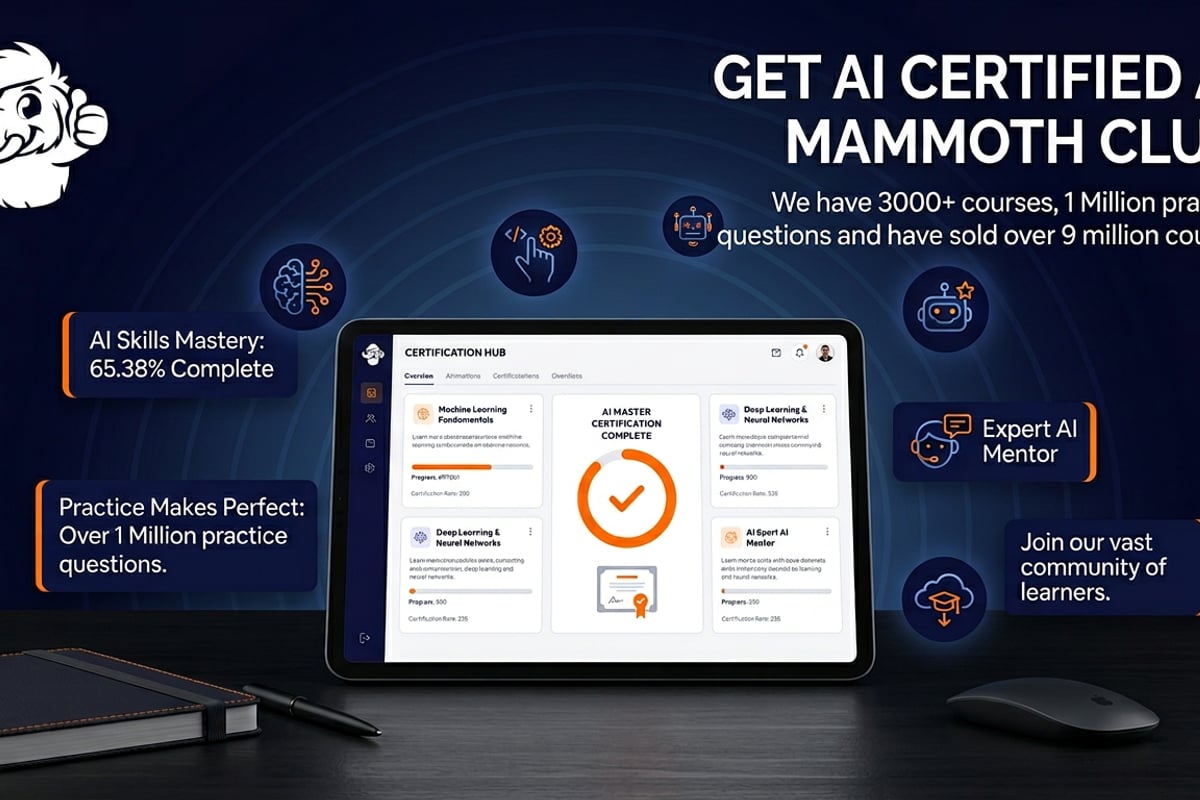
For comprehensive training that bridges theory and practice, consider programs offering structured certification paths. Mammoth Club offers AI certification with access to 3,000+ courses and over 1 million practice questions, built by experts who have helped millions learn AI skills. This type of structured training helps professionals move from conceptual understanding to job-ready implementation quickly.
Pillar 3: Real-World Application
Apply your skills to actual business problems. This transforms knowledge into measurable value and builds portfolio examples.
Projects might include:
- Automating customer service responses
- Generating content marketing materials
- Analyzing sales data for insights
- Building chatbots for internal operations

Comparing Learning Platform Approaches
Different platforms serve different learning needs. Understanding these distinctions helps you allocate study time effectively.
Traditional Tutorial Sites vs. Modern AI Platforms
| Feature | Traditional Sites (Javatpoint) | Modern AI Education |
|---|---|---|
| Content Focus | Theoretical algorithms | Practical tool usage |
| Update Frequency | Quarterly or less | Weekly or daily |
| Learning Method | Reading and memorization | Hands-on experimentation |
| Business Relevance | Academic foundations | Direct workplace application |
| Tool Coverage | Programming languages | AI platforms and APIs |
| Community Support | Minimal | Active forums and mentorship |
For learners seeking comprehensive education from top institutions, AakuLearn aggregates free AI courses from universities and companies, offering curated resources that complement tutorial-based learning.
Supplementing Javatpoint with Hands-On Resources
The javatpoint artificial intelligence tutorials provide vocabulary and concepts, but practical skills require different approaches. Combine multiple resource types for complete education.
Text-Based Learning:
- Use Javatpoint for quick concept reviews
- Read research papers for cutting-edge developments
- Follow AI blogs for implementation case studies
Video Learning:
Platforms like YouTube offer comprehensive AI introductions that combine visual explanations with demonstrations. Video tutorials excel at showing processes step-by-step, which helps when learning complex workflows.
Interactive Practice:
Nothing replaces direct experience with AI tools. Spend 70% of your learning time actually using ChatGPT, Claude, and other platforms to solve problems. Prompt engineering skills develop through iteration, not reading.
Maximizing Value from Free Learning Resources
Since javatpoint artificial intelligence content is freely available, strategic use maximizes return on time invested.
Active Learning Techniques
1. Take Implementation Notes
While reading theoretical content, immediately note how concepts apply to your work. Transform abstract algorithms into concrete use cases.
For example, when learning about classification algorithms, list three problems in your industry where classification would create value:
- Categorizing customer support tickets
- Identifying high-value sales leads
- Detecting fraudulent transactions
2. Build a Personal AI Knowledge Base
Create a reference document linking concepts to practical applications. When Javatpoint explains neural networks, add notes about which business problems neural networks solve effectively.
3. Test Concepts Immediately
After reading about a topic, open ChatGPT or Claude and experiment. If you just learned about few-shot learning, try crafting prompts that demonstrate the concept in action.
Identifying When to Move Beyond Introductory Content
You'll know it's time to advance beyond basic tutorials when:
- You can explain AI concepts clearly to non-technical colleagues
- You're comfortable with standard AI terminology
- You understand the difference between AI capabilities and limitations
- You're ready to build solutions rather than just understand theory
At this point, focus shifts from learning about AI to learning with AI. The Prompt Hero.Ai platform offers practical tutorials showing exactly how to use AI tools for real business tasks, with copy-and-paste prompts that deliver immediate results.

Addressing Common Learning Challenges
Many learners encounter similar obstacles when studying AI through free resources like javatpoint artificial intelligence tutorials.
Challenge 1: Information Overload
AI encompasses numerous subfields, each with deep technical complexity. Beginners often feel overwhelmed by the breadth of topics.
Solution: Focus on application-first learning. Instead of trying to understand every algorithm, identify one business problem and learn only the AI concepts needed to solve it. Build from specific to general rather than attempting comprehensive knowledge immediately.
Challenge 2: Theory-Practice Gap
Understanding how neural networks function mathematically doesn't automatically translate into building useful AI solutions.
Solution: Maintain a 30/70 ratio: 30% time on theory, 70% on hands-on practice. For every hour reading about AI, spend two hours using AI tools to accomplish real tasks.
Challenge 3: Outdated Information
AI technology evolves rapidly. Content written even six months ago may reference deprecated tools or outdated best practices.
Solution: Cross-reference multiple sources and prioritize content published in 2025-2026. Verify that tutorial examples work with current tool versions before investing significant learning time.
Challenge 4: Lack of Personalized Feedback
Self-directed learning through text tutorials provides no mechanism for correcting misconceptions or getting questions answered.
Solution: Join AI communities where you can ask questions and share your work. Platforms like Reddit's r/artificial and specialized Discord servers offer peer support. Additionally, testing your understanding by teaching concepts to others reveals knowledge gaps quickly.
Strategic Resource Allocation for AI Education
Professionals balancing learning with work responsibilities must allocate limited time strategically across resource types.
Weekly Learning Schedule Template
Monday-Tuesday (60 minutes): Conceptual Learning
- Review javatpoint artificial intelligence sections on new topics
- Read industry articles about AI applications
- Watch one educational video explaining complex concepts
Wednesday-Thursday (90 minutes): Hands-On Practice
- Complete practical exercises with ChatGPT or Claude
- Build small automation projects
- Experiment with prompt variations and document results
Friday (45 minutes): Review and Application
- Summarize key learnings from the week
- Identify one workplace task to automate using new skills
- Plan next week's learning priorities based on application needs
This schedule ensures theoretical knowledge serves practical application rather than becoming an end in itself.
Evaluating Your AI Learning Progress
Unlike traditional education with exams and grades, self-directed AI learning requires establishing personal benchmarks.
Skills-Based Progress Markers
Beginner Level:
- Can explain what AI is and isn't to non-technical audiences
- Understands basic terminology from javatpoint artificial intelligence tutorials
- Has experimented with ChatGPT or similar tools
Intermediate Level:
- Writes effective prompts that consistently produce useful outputs
- Can identify which AI tools suit specific business problems
- Has automated at least one repetitive work task using AI
Advanced Level:
- Designs complex workflows combining multiple AI tools
- Evaluates AI outputs critically for accuracy and bias
- Trains colleagues on AI implementation strategies
Moving through these levels requires combining conceptual learning from resources like Javatpoint with substantial hands-on practice applying AI to real challenges.
Building Portfolio Evidence
Document your AI journey by creating artifacts that demonstrate capabilities:
- Prompt libraries: Collections of effective prompts for common tasks
- Automation workflows: Documented processes showing how AI improved efficiency
- Case studies: Written analyses of problems solved using AI
- Tutorial content: Teaching materials explaining how you accomplished specific goals
These artifacts serve dual purposes: they reinforce your learning and provide evidence of skills for career advancement.
Future-Proofing Your AI Knowledge
The AI landscape changes rapidly, making adaptable learning skills more valuable than static knowledge.
Developing Learning Agility
Rather than memorizing specific tools or techniques, develop the ability to:
- Quickly evaluate new AI capabilities as they emerge
- Identify transferable principles across different AI platforms
- Test hypotheses about AI effectiveness for specific use cases
- Adapt workflows when better tools become available
The javatpoint artificial intelligence tutorials teach foundational concepts that remain relatively stable, but application methodologies evolve constantly. Build mental models that accommodate new information rather than rigid knowledge structures that become outdated.
Staying Current with AI Developments
Subscribe to AI newsletters covering business applications rather than purely technical advances. Understanding how other companies solve problems with AI provides implementation blueprints.
Follow AI researchers who explain developments in accessible language. Platforms like arXiv publish cutting-edge research, including studies on responsible AI evaluation and robust AI development approaches.
Test new tools immediately when they launch. Early adoption provides competitive advantages and builds intuition about AI capabilities.
Transitioning from Learning to Implementation
The ultimate goal of studying javatpoint artificial intelligence content and other resources is applying AI to create measurable business value.
From Student to Practitioner
Identify high-impact, low-complexity starting points:
- Automating email responses using AI-generated templates
- Creating social media content with AI assistance
- Summarizing meeting notes and extracting action items
- Analyzing customer feedback for common themes
These projects require minimal technical infrastructure while demonstrating AI's practical value. Success with simple implementations builds confidence for tackling more complex challenges.
Measure and communicate results:
- Track time saved through automation
- Calculate cost reductions from AI-assisted processes
- Document quality improvements in outputs
- Share wins with colleagues and leadership
Quantifiable results transform AI from theoretical interest into strategic business capability.
Mastering artificial intelligence requires combining conceptual understanding from resources like Javatpoint with extensive hands-on practice using modern AI tools. Whether you're starting with basic tutorials or advancing toward complex implementations, the key is maintaining focus on practical application that solves real business problems. Prompt Hero.Ai provides the practical tutorials, ready-to-use prompts, and step-by-step guidance that help professionals bridge the gap between learning about AI and achieving measurable results with it, transforming theoretical knowledge into workplace productivity and competitive advantage.