
Choosing the right python and ai course can feel overwhelming with thousands of options available in 2026. You need practical skills that translate directly to automating tasks, building AI tools, and solving real business problems-not just theoretical knowledge. This guide breaks down exactly what to look for in a quality course, compares the best options, and provides a clear learning path you can follow starting today.
What Makes a Quality Python and AI Course
Not all courses deliver the same value. The best python and ai course focuses on practical application rather than academic theory alone.
Key components of effective courses include:
- Hands-on coding exercises with real datasets
- Projects that mirror actual business scenarios
- Coverage of industry-standard libraries (NumPy, Pandas, TensorFlow, PyTorch)
- Integration with modern AI tools like ChatGPT and Claude APIs
- Clear explanations suitable for working professionals
A strong course teaches you to solve specific problems. For example, you should learn how to build a customer sentiment analyzer, automate data reporting, or create predictive models-not just understand what machine learning is.
Core Skills You Should Gain
Every comprehensive python and ai course should build these foundational capabilities:
- Python Programming Fundamentals: Variables, functions, loops, data structures, and object-oriented programming
- Data Manipulation: Working with Pandas DataFrames, cleaning messy data, and preparing datasets
- Machine Learning Basics: Supervised and unsupervised learning, model training, and evaluation metrics
- Deep Learning Frameworks: Building neural networks with TensorFlow or PyTorch
- AI Tool Integration: Using APIs from ChatGPT, Claude, and other modern AI platforms
The Google Crash Course on Python provides excellent foundational training for beginners who need to establish core programming skills before diving into AI applications.

Comparing Top Python and AI Courses
Different courses serve different needs. Here's how leading options stack up for working professionals in 2026:
| Course | Best For | Duration | Cost | Practical Focus |
|---|---|---|---|---|
| Harvard CS50 AI | Academic foundation | 12 weeks | Free | High (projects) |
| IBM Python for Data Science | Career switchers | 6 weeks | $49/month | Very High |
| Fast.ai | Deep learning practitioners | Self-paced | Free | Extremely High |
| Mammoth Club | Certification seekers | Ongoing access | Subscription | High (job-ready) |
Harvard’s CS50’s Introduction to Artificial Intelligence with Python stands out for its rigorous approach to fundamental concepts. You'll implement search algorithms, knowledge representation systems, and machine learning models from scratch-building deep understanding of how AI actually works.
The IBM Python for Data Science, AI & Development course takes a more applied approach. It emphasizes the libraries and workflows that data scientists use daily in corporate environments.
Fast.ai's Practical Philosophy
Fast.ai has revolutionized how people learn deep learning by starting with real applications first, then explaining the theory. This top-down approach helps you build working models within hours, maintaining motivation through tangible results.
Their course structure addresses a common frustration: spending weeks on theory before touching real problems. Instead, you train an image classifier in lesson one, then progressively deepen your understanding.
Building Your Learning Path
Success with a python and ai course requires more than just enrollment. Follow this structured approach:
Phase 1: Python Foundations (Weeks 1-3)
Start with core programming skills if you're new to Python. Focus on writing clean, readable code.
Daily practice routine:
- 1 hour of syntax and basic concepts
- 30 minutes solving coding challenges
- 30 minutes reading others' code on GitHub
Skip this phase if you already write Python professionally. Don't waste time on material you know.
Phase 2: Data Manipulation (Weeks 4-6)
Master Pandas and NumPy. These libraries form the foundation of every AI project.
Key exercises to complete:
- Load and clean a messy CSV dataset
- Perform exploratory data analysis on business metrics
- Create data visualizations that communicate insights
- Merge multiple data sources into analysis-ready formats
Real datasets matter here. Use public sources like Kaggle or your own company's anonymized data.
Phase 3: Machine Learning Fundamentals (Weeks 7-10)
Build your first predictive models using scikit-learn.
- Classification problems: Predicting customer churn, email spam detection, product categorization
- Regression problems: Sales forecasting, price prediction, demand estimation
- Clustering problems: Customer segmentation, anomaly detection, pattern recognition
Each project should solve a specific business problem. Generic "iris dataset" tutorials won't prepare you for real work.
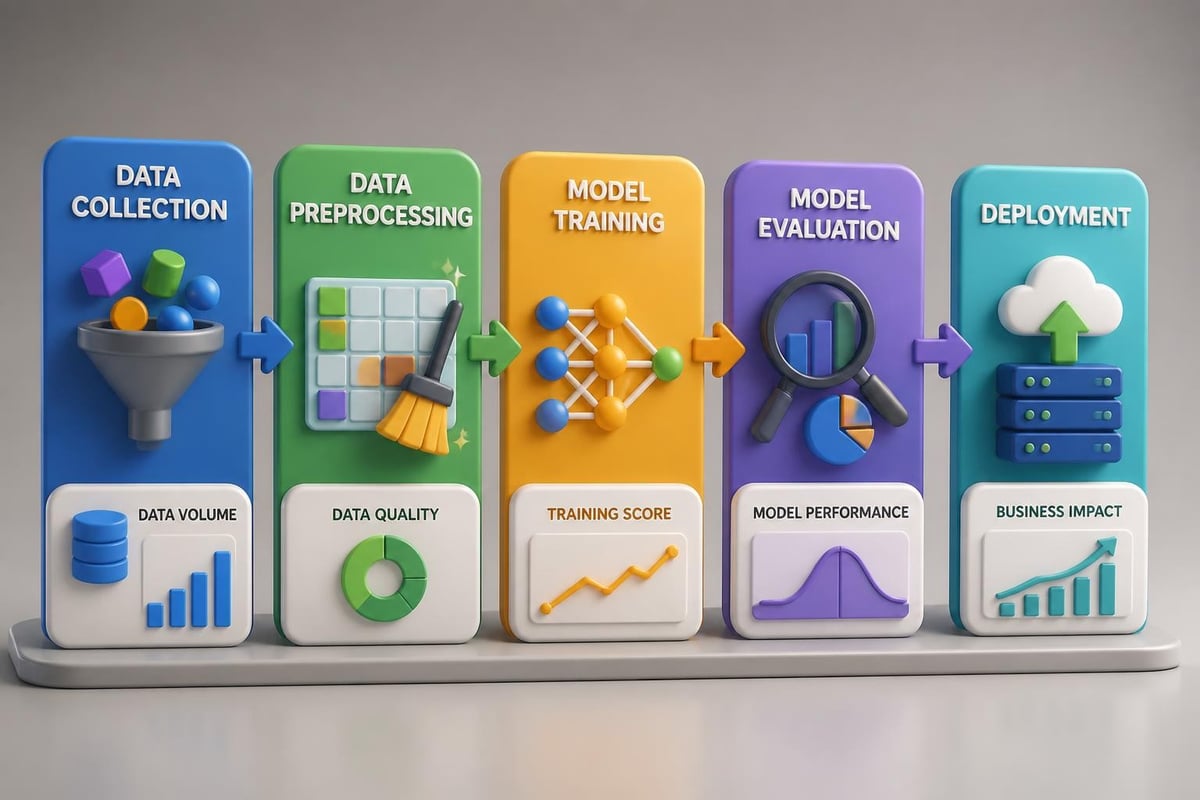
Phase 4: Deep Learning and Modern AI (Weeks 11-16)
Now you're ready for neural networks and transformer models.
Critical topics to master:
- Building neural networks with TensorFlow or PyTorch
- Transfer learning for image and text classification
- Fine-tuning language models for specific tasks
- Working with pre-trained models via API
The transition from traditional ML to deep learning can be jarring. Start with simple projects like image classification before tackling natural language processing.
Hands-On Project: Building an AI-Powered Content Analyzer
Let's walk through a practical project you'd complete in a comprehensive python and ai course. This analyzer processes customer feedback and extracts actionable insights.
Step 1: Set Up Your Environment
Install required libraries:
pip install pandas numpy openai scikit-learn matplotlib
Step 2: Load and Prepare Data
import pandas as pd
import numpy as np
from openai import OpenAI

# Load customer reviews
df = pd.read_csv('customer_reviews.csv')

# Clean text data
df['review_clean'] = df['review_text'].str.lower().str.strip()
df['review_clean'] = df['review_clean'].str.replace('[^ws]', '', regex=True)
Step 3: Use AI for Sentiment Analysis
client = OpenAI(api_key='your-api-key')

def analyze_sentiment(text):
    response = client.chat.completions.create(
        model="gpt-4",
        messages=[
            {"role": "system", "content": "You are a sentiment analyzer. Respond with only: Positive, Negative, or Neutral."},
            {"role": "user", "content": f"Analyze this review: {text}"}
        ],
        max_tokens=10
    )
    return response.choices[0].message.content.strip()

# Apply to dataset
df['sentiment'] = df['review_clean'].apply(analyze_sentiment)
Step 4: Extract Key Themes
def extract_themes(text):
    response = client.chat.completions.create(
        model="gpt-4",
        messages=[
            {"role": "system", "content": "Extract 2-3 key themes from customer feedback as comma-separated values. Focus on product features, service quality, or pain points."},
            {"role": "user", "content": text}
        ],
        max_tokens=50
    )
    return response.choices[0].message.content.strip()

# Sample 100 reviews for theme analysis
sample_reviews = df.sample(100)
sample_reviews['themes'] = sample_reviews['review_clean'].apply(extract_themes)
Expected Output
After processing 500 customer reviews, you'd see results like:
| Sentiment | Count | Percentage |
|---|---|---|
| Positive | 342 | 68.4% |
| Neutral | 98 | 19.6% |
| Negative | 60 | 12.0% |
Top themes identified:
- Fast delivery (mentioned in 45% of positive reviews)
- Product quality (mentioned in 38% of reviews)
- Customer service responsiveness (mentioned in 31% of reviews)
- Packaging concerns (mentioned in 67% of negative reviews)
This type of project demonstrates real value. You're not just learning syntax-you're solving actual business problems that save hours of manual work.
Certification and Career Advancement
Completing a python and ai course matters most when it leads to tangible career outcomes. In 2026, employers value demonstrated skills over certificates alone.
For those seeking formal recognition alongside practical training, platforms like Mammoth Club offer comprehensive AI certification programs. Mammoth Club provides access to over 3,000 courses and more than 1 million practice questions, allowing you to build job-ready skills while earning recognized credentials. The platform covers everything from Python fundamentals through advanced AI implementation, all designed for working professionals.

Building a Portfolio
Your course projects become portfolio pieces. Host them on GitHub with clear documentation:
- README files explaining the business problem solved
- Jupyter notebooks showing your analytical process
- Deployed demos (using Streamlit or Gradio) that others can interact with
- Results metrics demonstrating impact
Recruiters spend 30 seconds reviewing portfolios. Make your value immediately obvious.
Common Pitfalls to Avoid
Most people who start a python and ai course don't finish. Here's why, and how to avoid these traps:
Tutorial hell: Watching videos without coding yourself. Solution: Write code for every concept within 24 hours of learning it.
Outdated content: AI tools evolve rapidly. A course from 2024 may teach deprecated methods. Solution: Verify the course was updated in the last 6 months.
Theory overload: Understanding backpropagation mathematics before building a single model. Solution: Build first, deepen theory second.
Isolation: Learning alone without community support. Solution: Join course Discord servers, study groups, or AI communities on Prompt Hero.Ai where you can access step-by-step tutorials designed for practical application.

Integrating AI Tools Into Your Workflow
The most valuable python and ai course teaches you to combine traditional programming with modern AI APIs. This hybrid approach multiplies your productivity.
Practical Integration Examples
Data cleaning automation:
def clean_with_ai(messy_data):
    prompt = f"Standardize this address data: {messy_data}. Return only the cleaned address in format: Street, City, State ZIP"
    # AI call returns standardized format
    return cleaned_address
Code generation assistance:
When you're stuck on implementation, use AI to scaffold solutions. Then understand and modify the code rather than copying blindly.
Documentation and explanation:
def explain_analysis(dataframe, analysis_results):
    prompt = f"Explain these data findings to a non-technical executive: {analysis_results}. Focus on business implications."
    # Generate executive summary
    return ai_explanation
This integration mirrors how professionals work in 2026. You're not replacing programming skills with AI-you're augmenting them.
Advanced Topics Worth Exploring
After completing foundational material, these specialized areas offer high value:
Natural Language Processing Applications
- Customer support automation
- Document summarization and information extraction
- Semantic search implementation
- Content generation and optimization
Computer Vision Projects
- Quality control automation in manufacturing
- Receipt and document processing
- Facial recognition for security systems
- Medical image analysis
Reinforcement Learning
- Optimization problems in logistics
- Dynamic pricing strategies
- Game AI and simulation
- Robotics control systems
Research papers like studies on AI tutors in programming courses provide insights into cutting-edge applications you can implement yourself.
Time Investment and Expectations
A realistic python and ai course requires 200-300 hours of focused study and practice. That breaks down to:
- 10 hours per week = 5-7 months
- 15 hours per week = 3-5 months
- 20 hours per week = 2.5-4 months
Quality matters more than speed. Better to deeply understand 70% of a course than superficially complete 100%.
Weekly schedule example:
- Monday/Wednesday/Friday: 2 hours of new material and exercises
- Tuesday/Thursday: 1.5 hours applying concepts to personal projects
- Saturday: 3 hours building portfolio project
- Sunday: 1 hour reviewing and planning next week
Consistency beats intensity. Daily practice builds neural pathways more effectively than marathon weekend sessions.
Measuring Your Progress
Track specific capabilities rather than course completion percentages:
Skill benchmarks to achieve:
- Can you load, clean, and analyze a new dataset within 2 hours?
- Can you build a classification model with 80%+ accuracy?
- Can you explain your model's predictions to non-technical stakeholders?
- Can you deploy a working prototype that others can access?
- Can you integrate AI APIs into automated workflows?
When you answer "yes" to these questions, you've gained real skills regardless of which python and ai course you chose.
Staying Current After Course Completion
AI evolves monthly. Your learning can't stop at course completion.
Ongoing learning strategies:
- Follow key researchers on Twitter/X and read their papers
- Experiment with new models within 48 hours of release
- Rebuild portfolio projects using latest tools annually
- Contribute to open-source AI projects on GitHub
- Teach others through blog posts or mentoring
The research on AI-generated Python code highlights how rapidly the field advances. What works today may be obsolete in 18 months.
Resources like Prompt Hero.Ai offer continuously updated tutorials that reflect current best practices with tools like ChatGPT and Claude, helping you stay sharp beyond initial course work.
Mastering Python and AI requires choosing the right course, maintaining consistent practice, and focusing on projects that solve real problems. Whether you start with Harvard's rigorous CS50, IBM's career-focused training, or comprehensive platforms like Mammoth Club, the key is applying what you learn immediately to tangible business challenges. Ready to transform your workflow with practical AI skills? Visit Prompt Hero.Ai for step-by-step tutorials, copy-and-paste prompts, and real examples designed specifically for working professionals who want to automate tasks and boost productivity today.